
What is Aviation?
by Demetra Paizanis,
Communications Coordinator –
At some point in your life, you’ve probably stared out of an airplane window at 35,000 feet and had the thought: how is this giant metal tube in the sky right now?
You might be wedged between a stranger eating pretzels and someone watching three episodes of a true-crime documentary in a row, the hum of the engines filling the cabin, but the real mystery unfolding outside your window is far bigger. Below you, entire cities shrink into toy models. Rivers twist through landscapes like ribbons. Clouds stretch in soft white fields that look suspiciously like cotton candy. The whole planet suddenly looks small. And somehow, you are cruising across a continent faster than a highway full of NASCAR drivers.
Welcome to aviation.
Technology in Motion
Aviation is the science and technology of flying aircraft. It includes everything from small private planes and cargo jets to helicopters, drones, and experimental high-altitude aircraft operating near the edge of Earth’s atmosphere. Through centuries of experimentation, humanity’s dream of flight gradually turned into a working technology, but that story begins long before the first airplane ever left the ground.
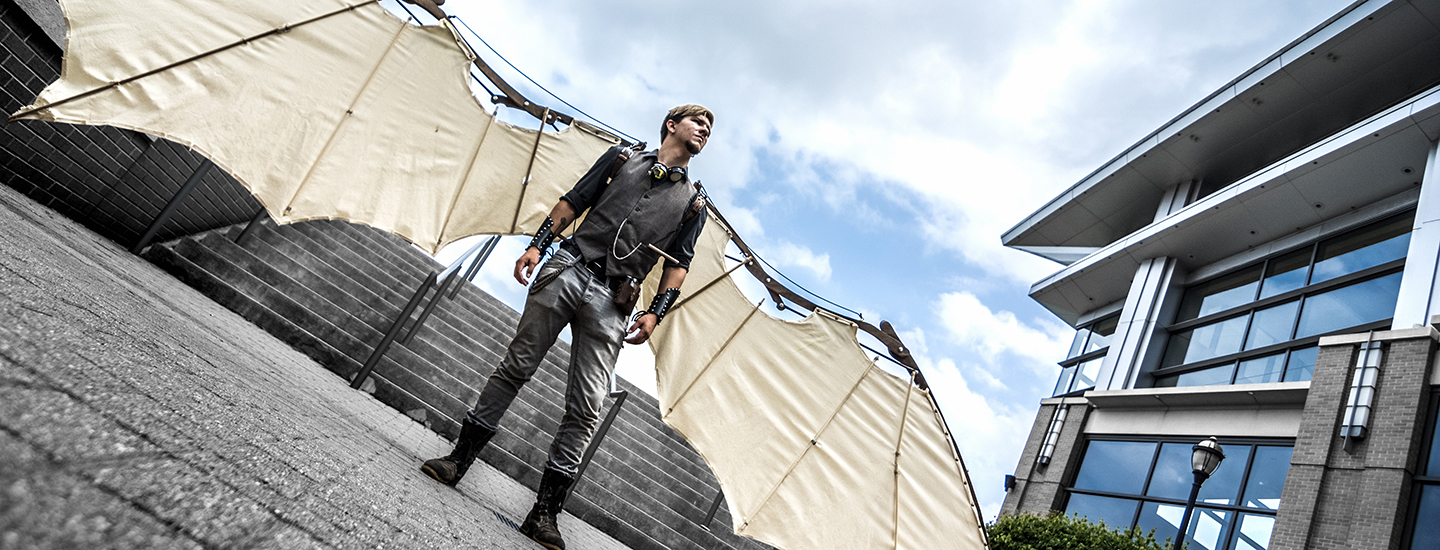
Humans have been staring at birds with envy for thousands of years. Stories about human flight appear in mythologies from many places. Greek mythology warned of the dangers through the tale of Icarus, whose wax wings melted when he flew too close to the sun. Centuries later, Leonardo da Vinci sketched flying machines resembling gliders and helicopters long before the technology existed to build them. For most of history, flight remained an idea rather than an achievable form of transportation.
That changed in December of 1903 when two bicycle mechanics from Ohio, Orville and Wilbur Wright, launched the first successful powered airplane flight near Kitty Hawk, North Carolina. Their aircraft stayed in the air for just 12 seconds and traveled about 120 feet. By modern standards, that’s roughly the length of a modest city block.
That short flight proved powered flight could be controlled. Once that barrier fell, aircraft design advanced rapidly in the decades that followed. In less than a century, aviation evolved from fragile wooden gliders to jet aircraft capable of crossing oceans in hours. On a typical day, more than 100,000 commercial flights operate worldwide. Which means that somewhere right now, someone is nervously gripping their armrest during turbulence while someone else is ordering tomato juice for reasons aviation science has yet to fully explain.
So how does the aircraft stay in the air at all?
Just Know That it Works
Short answer, lift. Long answer, aerodynamics.
When an airplane moves forward, air flows over and under its wings. The wings are shaped and angled so that the air pressure above and below them becomes different. At the same time, the wings push air downward as the aircraft cuts through the atmosphere. Those two effects together create lift, an upward force that counters gravity and allows the plane to stay in the air.
Now, to do that safely and reliably is a challenge in and of itself.
Modern aircraft must withstand intense aerodynamic forces, sudden temperature changes, and the repeated stress of thousands of takeoffs and landings. Engineers design structures that can endure turbulence and lightning strikes while remaining light enough to fly efficiently. Redundant systems ensure that if one component fails another can immediately take over. Every aircraft is tested again and again before it ever carries passengers.
Once an aircraft leaves the runway, a global system of people, technology, and coordination work together across continents. Air traffic controllers guide aircraft through crowded airspace. Meteorologists track storms that could disrupt routes. Maintenance crews inspect aircraft systems down to the smallest rivet before every departure. Dispatchers calculate routes, fuel loads, and timing so aircraft arrive where they should, when they should. Together, these professionals coordinate thousands of safe flights every day.
Because most of this work happens out of sight, flying can feel deceptively simple.
The Reasons We Fly
Commercial aviation remains one of the safest forms of transportation ever created. General aviation includes private pilots, flight schools, recreational flying, and small aircraft used for business transportation. Military aviation has fighter jets, surveillance aircraft, transport planes, and helicopters supporting defense operation and humanitarian missions. Helicopters, for example, often serve as flying ambulances, rushing injured patients to hospitals when every minute matters.
Then, there is cargo aviation, which moves everything from fresh flowers to smartphones across continents overnight. If you have ever ordered something online and wondered how it arrived so quickly, chances are aviation played a role somewhere along the way. In recent years, drones, which were once mostly limited to military operations and hobbyists, now assist with aerial photography, infrastructure inspections, environmental monitoring, and disaster response. In other words, aviation, doesn’t just move people through the sky, but data, supplies, services, and increasingly much more!
The Emerging Frontier
Looking ahead, the next frontier may be much closer to home with the emerging field of advanced air mobility via small electric aircraft designed to move people and cargo around cities and regions. Imagine an Uber that arrives… vertically. It sounds futuristic, but prototypes already exist.
In a world that runs on speed and connection, aviation is one of the most powerful bridges between people, economies, and ideas, and that bridge continues to evolve.
Engineers are developing aircraft designed to reduce emissions and noise on shorter routes. Sustainable aviation fuels may eventually make traditional jet engines cleaner. Designers are experimenting with quieter propulsion systems and more efficient aerodynamics. Private aerospace companies are building vehicles capable of traveling faster and higher than conventional aircraft with some even exploring the return of supersonic passenger travel.
New York to London in three hours.
Just enough time to finish a movie, check your email, and wonder again how humans managed to build something capable of crossing an ocean in a single afternoon.