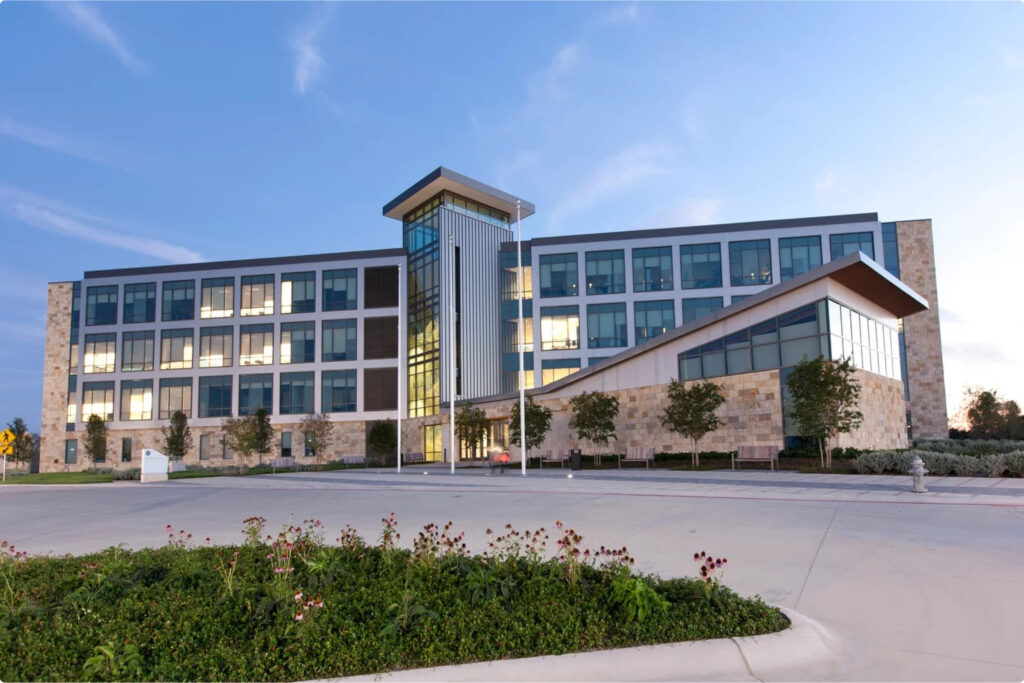
Bias Based Profiling Guidelines
Learn about the Bias Based Profiling Guidelines at Texas A&M University-Central Texas and its commitment to fair, equitable treatment.Definitions
Bias – Bias is the selection of individuals based solely on a common trait of a group. This includes but is not limited to race, ethnic background, gender, sexual orientation, religion, economic status, age, cultural group or any other identifiable groups.
Bias – Based Profiling – A law enforcement initiated action based on an individual’s race, ethnicity, national origin or other bias rather than on the individual’s behavior or on information identifying the individual as having engaged in criminal activity.
Bias-based profiling pertains to persons who are viewed as suspects or potential suspects of criminal behavior, to include traffic contacts, field contacts, and asset seizure and forfeiture efforts. The term is not relevant as it pertains to witnesses, complainants, or other citizen contacts.
Race or Ethnicity – Of a particular descent, including Caucasian, African, Asian, Hispanic, or Native American.
Pedestrian Stop – An interaction between a peace officer and an individual who is being detained for the purpose of a criminal investigation in which the individual is not under arrest.
Traffic Stop – A peace officer who stops a motor vehicle for an alleged violation of a law or ordinance regulating traffic.
Prohibition
- The use of bias-based profiling guidelines in traffic contacts, field contacts, and in asset seizure and forfeiture is explicitly prohibited
- The prohibition against bias-based profiling does not prevent officers from considering race, ethnicity, national origin, or other characteristics when making a detention decision. Officers may consider these factors only when they are part of a specific suspect description during a search. However, an officer engages in bias-based profiling when they detain an individual or investigate that person’s activities solely because of race, ethnicity, national origin, or another protected characteristic. Examples of bias-based profiling include, but are not limited to, the following:
- Citing a driver who is speeding in a stream of traffic where most other drivers are speeding because of the cited driver’s race, ethnicity, or national origin
- Detaining the driver of a vehicle based on the determination that a person of that race, ethnicity, or national origin is unlikely to own or possess that specific make or model of vehicle.
- Detaining an individual based upon the determination that a person of that race, ethnicity, or national origin does not belong in a specific part of town or a specific place
- A law enforcement agency can derive two principles from the adoption of this definition of bias-based profiling:
- Police may not use racial or ethnic stereotypes or any form of bias as factors in selecting whom to stop and search; however, police may use race, ethnicity, or national origin in conjunction with other known factors of the suspect.
- Law enforcement officers may not use racial or ethnic stereotypes or any form of bias as factors in selecting whom to stop and search. Bias-based profiling is not relevant as it pertains to witnesses, etc.
Training
- Officers shall adhere to all Texas Commission on Law Enforcement (TCLE) training and the Law Enforcement Management Institute of Texas (LEMIT) requirements, as mandated by law.
- All officers must complete the TCLE racial profiling training and education program by the earlier of these dates: the second anniversary of receiving a license under Chapter 1701 of the Texas Occupations Code or the date they apply for an intermediate proficiency certificate. A person who, on September 1, 2001, held a TCLE intermediate proficiency certificate, or who had held a peace officer license issued by TCLE for at least two years, shall complete a TCLE training and education program on racial profiling no later than September 1, 2003.
- The Chief of Police must attend the LEMIT racial profiling program as part of the initial training and ongoing education required for the position.
- An individual appointed or elected as a Police Chief before the effective date of this Act shall complete the program on racial profiling established under Subsection (j), Section 96.641, Education Code, as added by this Act, no later than September 1, 2003.
- Annually, the Department shall include profiling related training that should include field contacts, traffic stops, search issues, asset seizure and forfeiture, interview techniques, cultural diversity, discrimination, and community support.
Complaint Investigation
- The department accepts complaints from anyone who believes an officer stopped or searched them because of their race, ethnicity, national origin, or another form of bias-based profiling. The department prohibits anyone from discouraging, intimidating, coercing, or discriminating against a person for filing a complaint.
- Any employee who receives an allegation of bias-based profiling, including the officer who initiated the stop, shall record the person’s name, address and telephone number, and forward the complaint to his or her supervisor. In addition, the person with a complaint should be directed to the Chief of Police. Any employee contacted shall provide to that person the department process for filing a complaint and where possible, provide that person with a copy of the department complaint form. All employees will report any allegation of bias-based profiling to their superior before the end of their shift.
- The department will investigate each complaint thoroughly and promptly. It will acknowledge all complaints in writing and provide the complainant with the disposition of the complaint within a reasonable time. Investigators will forward all findings and recommendations for disciplinary action, retraining, or policy changes to the Chief of Police.
- If the department sustains a bias-based profiling complaint against an officer, it may take corrective or disciplinary action, up to and including termination. Examples of corrective action include remedial training and cultural diversity training.
- If there is a departmental video/audio recording of the incident upon which a complaint of bias-based profiling is based, upon commencement of an investigation by this department into the complaint and with a written request of the officer made the subject of the complaint, this department shall promptly provide a copy of the recording to that officer.
Public Education
The Texas A&M University–Central Texas Police Department will inform the public of its policy against bias-based profiling and the complaint process. The department may use news media, presentations to service and community organizations, the internet, campus meetings, and its web page to inform the public. The department also provides information in languages other than English.
Citation Data Collection and Reporting
- Each officer must collect information related to any traffic stop that results in a citation. Along with each citation, officers must include the following information:
- Violation;
- Violator’s race or ethnicity;
- Whether a search was conducted;
- Was the search consensual;
- Arrest; and
- Other violation
- Not later than March 1st of each year, the department shall submit a report to the Vice President of Finance and Administration that includes the information gathered by the citations from the preceding year. The report will include:
- A breakdown of citations by race or ethnicity;
- Number of citations that resulted in a search;
- Number of searches that were consensual; and
- Number of stops that resulted in custodial arrest for other violations.
- Number of Bias Based Profiling complaints filed against officers and the outcome of any related investigation.
- Each quarter the department will compile a comparative report, by Officer, of Citation Data Collection information. The Chief of Police or a designee will review this information, address any concerns raised by citizens, and take appropriate action when necessary.
Use of Video and Audio Equipment
- The department equips each motor vehicle used for traffic and pedestrian stops with a video camera and transmitter-activated equipment. Officers record all traffic and pedestrian stops when video and audio equipment can capture the interaction.
- The Texas A&M Central Texas Police Department shall retain the video and audiotapes of each traffic and pedestrian stop for a minimum of 90 days after the date of the stop. If someone files a complaint alleging that an officer engaged in bias-based profiling during a traffic or pedestrian stop, the department will retain the stop’s video and audio recordings until it resolves the complaint.
- Supervisors will ensure officers under their respective commands are recording their traffic and pedestrian stops by reviewing a recording of each officer at least once every 30 days.
- Supervisors will forward a report of their review to the Chief of Police, who will take appropriate action to correct deficiencies.
Collecting and Reporting Information
The Texas A&M University–Central Texas Police patrol vehicles are equipped with video cameras and audio recording equipment and therefore TAMUCT Police Officers are exempt from the reporting requirements under the Code of Criminal Procedure Article 2.133. In addition, the UTA Police Department is exempt from the reporting requirements of Code of Criminal Procedure Article 2.134.
Annual Administrative Review
- Each year the Chief of Police will review Biased Based Profiling Directives and department practices including citizen complaints and/or concerns, and recommend improvements to address deficiencies.
University Police Resources
Contact Us
Contact us by phone, email or visit us in person.
We are located in the Core Building, and open Monday through Friday, 8:00 a.m. to 5:00 p.m.