
Campus Security Authority
Clery Act & Crime Reporting – Guidelines for Campus Security Authorities (CSA); Crime DefinitionsResources
Overview of the Clery Act
In April 1986, Jeanne Clery, a freshman at Lehigh University, was assaulted and killed in her residence hall. In response to her death, Congress enacted the Jeanne Clery Campus Safety Act, commonly known as the Clery Act. The law promotes campus safety by increasing awareness of crime and security issues on college campuses.
The Clery Act requires colleges and universities that receive federal funding, including Texas A&M University-Central Texas (TAMUCT), to collect, publish, and distribute campus crime statistics and security information.
Crime Reporting and Statistics
TAMUCT compiles Clery Act crime statistics using reports received from:
- The Texas A&M University-Central Texas Police Department
- Local law enforcement agencies
- Campus Security Authorities (CSAs)
Clery Act Requirements
The Clery Act, codified at 20 U.S.C. § 1092(f), establishes reporting and disclosure requirements for certain institutions of higher education.
The law requires institutions to:
- Collect and report crime statistics
- Document arrests and disciplinary referrals
- Maintain records, including a daily crime log
- Publish security policies and procedures
- Issue timely warnings when necessary
- Distribute an Annual Security Report
Annual Campus Security Report
TAMUCT publishes its Annual Campus Security Report by October 1 each year. The report is available through the University’s Clery Act webpage.
The report outlines the University’s reporting procedures, security policies, crime prevention efforts, and statistical disclosures.
Reporting Responsibilities
TAMUCT encourages all members of the University community to report violations of federal, state, and local laws, as well as violations of University policies.
Faculty and staff members with significant responsibility for student and campus activities must report Clery Act crimes and public safety incidents to the University Police Department.
Mental health counselors may encourage clients to submit voluntary and confidential crime reports when appropriate.
Crime Statistics and Recordkeeping
The University Police Department coordinates and compiles all Clery Act reports.
Each reported violation is counted as a separate offense, regardless of whether a police report is filed.
These offenses are included in annual crime statistics to comply with federal reporting requirements and provide accurate information to the campus community.
Guidelines for Campus Security Authorities (CSA)
- Who is a Campus Security Authority (CSA)?
- How does a CSA fulfill their responsibilities?
- What should a CSA Avoid Doing?
- Crime Reporting: Instructions for completing the Crime Report Form
- Clery Crime Definitions
- Clery Crime Geography and Location Definitions
Who is a Campus Security Authority (CSA)?
A Campus security authority (CSA) is a Clery-specific term that encompasses certain individuals and organizations associated with an institution. The only exemptions allowed are for a physician in a campus health center, a pastoral counselor or a counselor in a counseling center while serving in those designated positions.
The groups below serve as Campus Security Authorities (CSAs):
Security Personnel Who Qualify as CSAs
- Police or security department employees are CSAs. If you have a police or security department, it is obvious that the department meets this requirement. However, has the department provided CSA training to all employees?
- Campus police officers, front line supervisors, and administrators, such as a Lieutenant, Captain, Assistant Chief, Victim Services Coordinator, etc. All the employees in the department, except office support staff, are campus security authorities. Keep in mind that this includes student employees (other than office staff) who handle tasks like patrolling, monitoring access, providing a driving, or walking safety escort, etc.
Institutional Reporting Contacts
- Individual or organization representative specified in an institution’s statement of campus security policy as an individual or organization to which students and employees should report criminal offenses.
- An official of an institution who has significant responsibility for student and campus activities, including, but not limited to, student housing, student discipline and campus judicial proceedings. An official has the authority and duty to act or respond on behalf of the institution.
Positions with Significant Responsibility
- An official of an institution who has significant responsibility for student and campus activities, including, but not limited to, student housing, student discipline and campus judicial proceedings. An official has the authority and duty to act or respond on behalf of the institution.
Evaluating Employee Functions
The concept of “significant responsibility for student and campus activities” is quite broad. Official responsibilities and job titles vary significantly at each campus, which is why Education Department doesn’t provide an all-inclusive list of specific titles in the regulations.
The Clery handbook states, “To determine specifically which individuals or organizations are campus security authorities for your institution, consider the function of that individual or office. Look for officials (i.e., not support staff) whose functions involve relationships with students. If someone has significant responsibility for student and campus activities, he or she is a campus security authority.
Examples of CSA Individuals
The following positions often qualify as Campus Security Authorities (CSAs) and should be evaluated accordingly:
Administrative Leadership Roles
- University Administrators (Vice Presidents, Deans, Associate Deans, Department Heads)
- Individuals that oversee disciplinary procedures
- Members who serve in offices or on committees where students report or discuss crimes, alleged crimes, or other concerning situations.
Student Affairs and Housing Roles
- Professional staff in a Dean of Students office, including leaders in Student Affairs and Housing
- University Administrators (Vice Presidents, Deans, Associate Deans, Department Heads)
- The individuals that oversee disciplinary procedures
- Personnel who serve in offices or on committees where students report or discuss crimes, alleged crimes, or other concerning situations.
- Professional staff in a Dean of Students office, including leaders in Student Affairs and Housing
- A staff in the Student Center or Student Union Building
- Staff in the Student Activities Office (handling extracurricular activities)
- Faculty or Staff Advisors to Student Organizations, extracurricular activities, study abroad activities, camps
- Resident Assistants/Advisors; Resident and/or Community Directors
- Students who monitor access to dormitories or other facilities
- Coordinator of Greek Affairs (or related positions)
- Title IX coordinator
- An ombudsperson (including student ombudspersons)
Safety and Advocacy Personnel
- Title IX coordinator
- The director of a campus health or counseling center
- Victim advocates or others who are responsible for providing victims with advocacy services, such as assisting with relocation, disciplinary action, or court cases, etc
- Members of a sexual assault response team (SART) or other sexual assault advocates
- Contract security officers and local law enforcement personnel whom the institution contracts to provide campus safety services.
- Event Security Staff; and
- Physicians, health educators, counselors, and victim advocates who receive crime reports or who have significant responsibility for student and campus activities.
Athletics Personnel
- Athletic Directors and Coaches (including Assistant ADs and Assistant Coaches)
Separate Campus and Branch Campus Personnel
- Administrators at Branch/Satellite/Separate Campuses
Examples of Individuals Who Are Not CSAs
Examples of individuals who would “not” meet the criteria for being campus security authorities on any campus other than TAMUCT include:
- A faculty member who does not have any responsibility for student and campus activity beyond the classroom
- Clerical or cafeteria staff
- Facilities or maintenance staff
Campus Security Authority Training
The University requires all Campus Security Authority (CSA) employees to complete annual online training. For additional information, contact Sherry K. Doggett, Clery Compliance Coordinator at [email protected] or [email protected] or 254.501.5802. The Annual CSA training is available through TrainTraq. (Clery Act Guidelines for A&M System Campus Security Authorities, Course #2111844). Additionally, the course explains the Clery Act, the reasons for CSA designation, and reporting responsibilities.
How do Campus Security Authorities Fulfill Their Responsibilities?
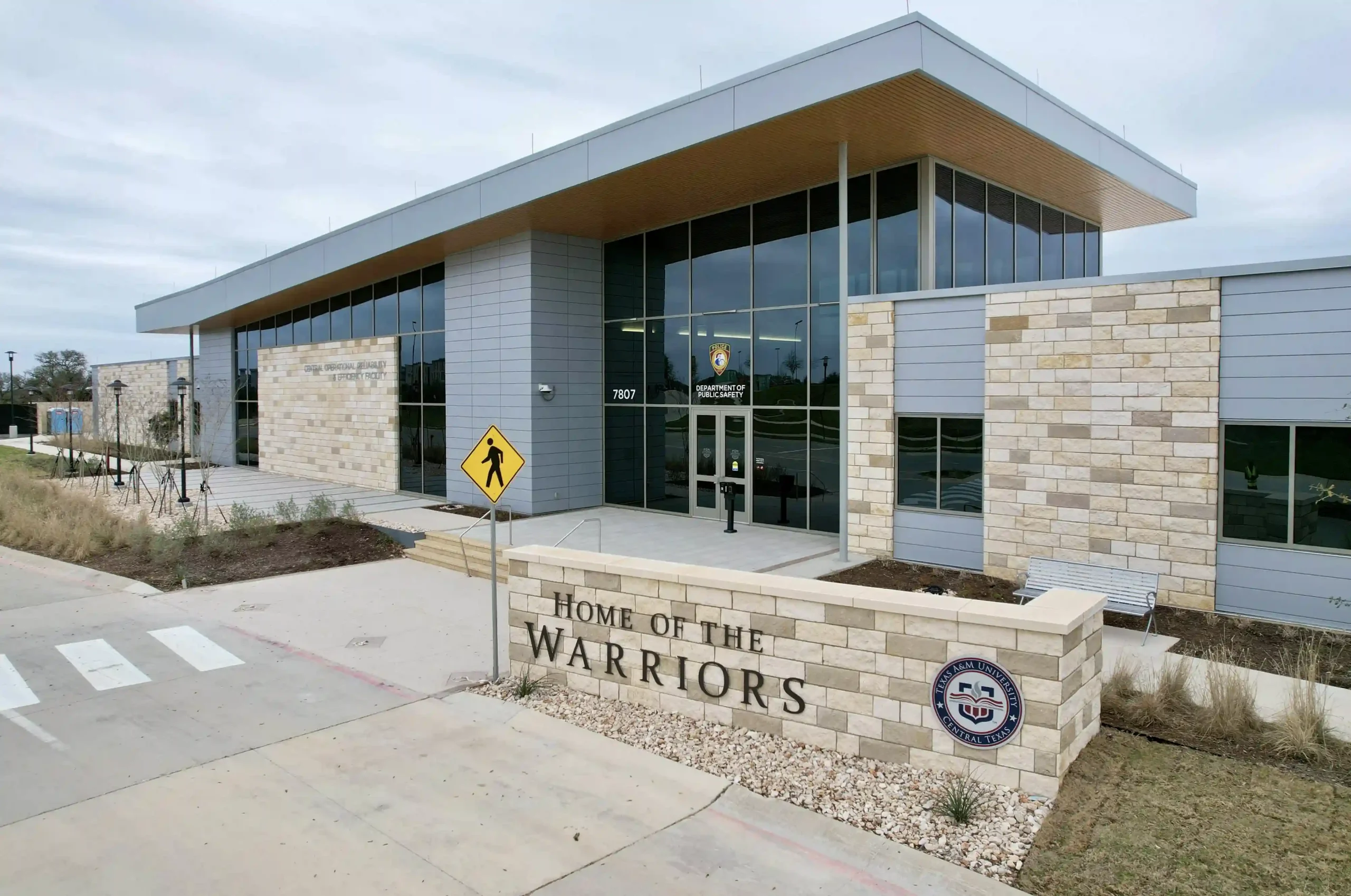
When a CSA receives a crime report, the CSA should first ask whether the reporting party would like to report the crime to the police. If they would, they should contact the Texas A&M University – Central Texas Police Department at (254-501-5802). The police department is located at 7807 West Campus, Core Building. If the reporting party reports an emergency in progress, instruct them to call 911 immediately. If they are unable to, the CSA may do so on their behalf.
If the reporting party does not want to contact the police about the crime, the CSA should complete a Campus Security Authority Crime Report Form. Even if the reporting party chooses to contact the police, the CSA may complete the form for recordkeeping purposes and select the appropriate box for the law enforcement agency receiving the report.
How to Submit a Crime Statistics Report Form
To promote campus safety and encourage timely reporting of certain criminal offenses, complete one of the forms at the top of this page. Exemptions apply only to physicians in campus health centers, pastoral counselors, and counselors in counseling centers while serving in those designated roles.
Instructions for filling out the form:
Completing the Report
- Ask the reporting party to read the boxed section at the top of the form.
- Determine whether they have reported or plan to report the crime to the police. Remind them that reporting a crime does not require filing charges and may be done anonymously.
- When available, include identifying information for the reporting party. This helps prevent double-counting crimes. Personal identifying information is not included in Clery Act statistical disclosures.
- If a victim does not want the report shared beyond the CSA, explain that federal law requires CSAs to submit reports for statistical purposes. Reports may be submitted without identifying the victim.
Documenting the Incident
- Record the crime location as accurately as possible. Include the building name, parking lot zone, street address, or nearest cross street.
- Provide a detailed description of the incident. Include injuries, weapons, and any indications that bias motivated the offense. If bias is suspected, ask why the reporting party believes bias was a factor.
- After gathering the necessary information, select the appropriate boxes on the form. Review the crime definitions if needed. Contact Sherry K. Doggett at 254-501-5802 with questions.
Additional Reporting Requirements
- Report liquor, drug, and weapons violations when an arrest, citation, or disciplinary referral occurs. Record the number of individuals arrested or referred.
- Identify the appropriate Clery Act geographic location whenever possible. Review the location definitions if needed. Contact Sherry K. Doggett at 254-501-5802 for assistance.
Submit the Completed Form
After completing the form, submit it through the online reporting system. The system records the submission date and time and immediately emails the report to the TAMUCT Clery Compliance Coordinator.
You may also submit information through the following methods:
- Phone: 254-501-5802
- Mail or In Person:
Texas A&M University-Central Texas Police Department
7807 West Campus Dr.
Core Building,
Killeen, TX 76549
Attn: Sherry K. Doggett - Fax: 254-501-5806
- Email: [email protected]
What Should a Campus Security Authority Avoid Doing?
CSAs do not investigate crimes. They also do not report information learned indirectly, such as:
- Conversations overheard in hallways
- Comments made during classroom discussions
- Statements made during speeches, workshops, or group presentations
- Information received through other indirect means
Law enforcement personnel should handle investigations and evidence collection. Although victims may receive information about reporting options, no one should pressure them to contact law enforcement.
What are Campus Security Authorities Required to Do?
CCSAs must report allegations of Clery Act crimes to the TAMUCT Police Department, the University’s designated reporting office.
The Clery Act requires reporting of:
- Murder and non-negligent manslaughter
- Negligent manslaughter
- Sexual assault
- Robbery
- Aggravated assault
- Burglary
- Motor vehicle theft
- Arson
CSAs must also report the following crimes when bias motivates the offense:
- Simple assault
- Larceny (theft)
- Intimidation
- Vandalism
Timely reporting is essential. If a crime report stops with a CSA, the University may not meet its Clery Act obligations.
Prompt reporting also helps provide safety information that may benefit the campus community.
Crime Definitions
Murder and Non-negligent Manslaughter
The willful killing of one human being by another.
Negligent Manslaughter
The killing of another person through gross negligence.
Sexual Assault
An offense that meets the definition of rape, fondling, incest, or statutory rape as used in the FBI’s Uniform Crime Reporting program. A sex offense is any sexual act directed against another person, without the consent of the victim, including instances where the victim is incapable of giving consent.
Rape
The penetration, no matter how slight, of the vagina or anus with any body part or object, or oral penetration by a sex organ of another person, without the consent of the victim. This offense includes the rape of both males and females.
Fondling
The touching of the private body parts of another person for the purpose of sexual gratification, without the consent of the victim, including instances where the victim is incapable of giving consent because of his/her age or because of his/her temporary or permanent mental incapacity.
Incest
Sexual intercourse between persons who are related to each other within the degrees wherein marriage is prohibited by law.
Statutory Rape
Sexual intercourse with a person who is under the statutory age of consent. Sexual assault is defined in the Texas Penal Code, Chapter 22, Section 22.011.
Robbery
The taking or attempting to take anything of value from the care, custody, or control of a person or persons by force or threat of force or violence and/or by putting the victim in fear.
Aggravated Assault
An unlawful attack by one person upon another for the purpose of inflicting severe or aggravated bodily injury. This type of assault is usually accompanied using a weapon or by means likely to produce death or great bodily harm. (It is not necessary that injury result from an aggravated assault when a gun, knife, or other weapon is used which could and probably would result in serious personal injury if the crime were successfully completed.)
Burglary
The unlawful entry of a structure to commit a felony or a theft. For reporting purposes this definition includes unlawful entry with intent to commit a larceny or felony; breaking and entering with intent to commit a larceny; housebreaking; safecracking; and all attempts to commit any of the aforementioned.
Motor Vehicle Theft
The theft or attempted theft of a motor vehicle. (Classify as motor vehicle theft all cases where automobiles are taken by persons not having lawful access even though the vehicles are later abandoned – including joyriding.)
Arson
Any willful or malicious burning or attempt to burn, with or without intent to defraud, a dwelling house, public building, motor vehicle or aircraft, personal property of another, etc.
Hazing
Any intentional, knowing, or reckless act committed by a person (whether individually or in concert with other persons) against another person or persons regardless of the willingness of such other person or persons to participate that is committed in the course of an initiation into, an affiliation with, or the maintenance of membership in, a student organization and causes or creates a risk, above the reasonable risk encountered in the course of participation in the institution of higher education or the organization (such as the physical preparation necessary for participation in an athletic team), of physical or psychological injury.
- Examples of conduct that cause or create such a risk include whipping, beating, striking, electronic shocking, placing of a harmful substance on someone’s body, or similar activity; causing, coercing, or otherwise inducing sleep deprivation, exposure to the elements, confinement in a small space, extreme calisthenics, or other similar activity; causing coercing, or otherwise inducing another person to consume food, liquid, alcohol, drugs, or other substances; causing, coercing, or otherwise inducing another person to perform sexual acts, ; any activity that places another person in reasonable fear of bodily harm through the use of threating words or conduct; any activity against another person that includes criminal violation of local, State, Tribal, or Federal Law; and any activity that induces, causes, or requires another person to perform a duty or task that involves a criminal violation of local, State, Tribal, or Federal law.
- The term student organization means an organization at an institution of higher education (such as club, society, association, varsity or junior varsity athletic team, club sports team, fraternity, sorority, band, or student government) in which two or more of the members are students enrolled at the institution of higher education, whether or not the organization is established or recognized by the institution.
Additional Crimes
Domestic Violence
A felony or misdemeanor crime of violence committed by a current or former spouse or intimate partner of the victim; by a person with whom the victim shares a child in common; by a person who is cohabitating with or has cohabitated with the victim as a spouse or intimate partner; by a person similarly situated to a spouse of the victim under the domestic or family violence laws of the jurisdiction in which the crime of violence occurred, or by any other person against an adult or youth victim who is protected from that person’s acts under the domestic or family violence laws of the jurisdiction in which the crime of violence occurred. Any incident meeting this definition is considered a crime for the purposes of Clery Act reporting. Family violence is defined in the Texas Family Code, Chapter 71, Section 71.004.Dating ViolenceViolence committed by a person who is or has been in a social relationship of a romantic or intimate nature with the victim. The existence of such a relationship shall be determined based on the reporting party’s statement and with consideration of the following factors:
- (i) The length of the relationship
- (ii) The type of relationship, and
- (iii) The frequency of interaction between the persons involved in the relationship.
Dating violence includes, but is not limited to, sexual or physical abuse or the threat of such abuse. Dating violence does not include acts covered under the definition of domestic violence.
Any incident meeting this definition is considered a crime for the purposes of Clery Act reporting. Dating violence is defined in the Texas Family Code, Chapter 71, Section 71.0021.
Stalking
Engaging in a course of conduct directed at a specific person that would cause a reasonable person to fear for the person’s safety or the safety of others or suffer substantial emotional distress. Course of conduct means two or more acts, including, but not limited to, acts in which the stalker directly, indirectly, or through third parties, by any action, method, device, or means, follows, monitors, observes, surveils, threatens, or communicates to or about a person, or interferes with a person’s property. Substantial emotional distress means significant mental suffering or anguish that may but does not necessarily require medical or other professional treatment or counseling. Reasonable person means a reasonable person under similar circumstances and with similar identities to the victim. Any incident meeting this definition is considered a crime for the purposes of Clery Act reporting. Stalking is defined in the Texas Penal Code, Chapter 42, Section 42.072.
Hate Crime
A crime reported to local police agencies or to a campus security authority that manifests evidence that the victim was intentionally selected because of the perpetrator’s bias against the victim. The categories of bias include the victim’s actual or perceived race, religion, gender, gender identity, sexual orientation, ethnicity, national origin, and disability. Hate crimes include those crimes (defined above) and larceny, simple assault, intimidation, and the destruction/damage/vandalism of property (defined below).
Larceny
The unlawful taking, carrying, leading, or riding away of property from the possession or constructive possession of another.
Simple Assault
The unlawful physical attack by one person upon another where neither the offender displays a weapon, nor the victim suffers obvious severe or aggravated bodily injury involving apparent broken bones, loss of teeth, possible internal injury, severe laceration, or loss of consciousness.
Intimidation
To unlawfully place another person in reasonable fear of bodily harm through the use of threatening words and/or other conduct, but without displaying a weapon or subjecting the victim to actual physical attack.
Destruction/Damage/Vandalism of Property
To destroy willfully or maliciously, damage, deface, or otherwise injure real or personal property without the consent of the owner or the person having custody or control of it.
Arrest and Referral for Disciplinary Action
Arrest is defined as persons processed by arrest, citation, or summons. Referral for disciplinary action is defined as the referral of any person to any official who initiates a disciplinary action of which a record is kept, and which may result in the imposition of a sanction. Clery Act statistics are disclosed for arrests and referrals regarding liquor law violations, drug law violations, and illegal weapons possession. Only violations of the law resulting in arrest or referral are disclosed. Violations of institutional policy alone are not included in Clery Act statistics
Liquor Law Violation
The violation of State or local laws or ordinances prohibiting the manufacture, sale, purchase, transportation, possession, or use of alcoholic beverages, not including driving under the influence and drunkenness.
Drug Law Violation
The violation of laws prohibiting the production, distribution, and/or use of certain controlled substances and the equipment or devices utilized in their preparation and/or use. The unlawful cultivation, manufacture, distribution, sale, purchase, use, possession, transportation, or importation of any controlled drug or narcotic substance. Arrests for violations of State and local laws, specifically those relating to unlawful possession, sale, use, growing, manufacturing, and making of narcotic drugs.
Weapon Law Violation
The violation of laws or ordinances prohibiting the manufacture, sale, purchase, transportation, possession, concealment, or use of firearms, cutting instruments, explosives, incendiary devices, or other deadly weapons.
Clery Crime Geography
For Clery Act reporting purposes, TAMUCT includes only crimes that occur within its Clery geography. Clery geography includes on-campus property, public property, non-campus property, and separate campuses.
Location Definitions
On-campus property
Any building or property that the institution owns or controls within its reasonably contiguous geographic area and uses to support its educational purposes, including residence halls and academic facilities; or
Any building or property located within or reasonably contiguous to that area that the institution owns, another party controls, students frequently use, and supports institutional purposes, such as food service facilities or bookstores.
Public Property
All public property, including thoroughfares, streets, sidewalks, and parking facilities, that is within the campus, or immediately adjacent to and accessible from the campus.
Non campus buildings or property
Any building or property that the institution owns or controls, uses to support its educational purposes, and makes available for frequent student use, when the property is not located within the institution’s reasonably contiguous geographic area.
Any building or property that an officially recognized student organization owns or controls; or
Separate Campus
Consider an additional location as a separate campus if it meets all the following criteria:
- The university owns or controls the site.
- It is not reasonably geographically contiguous with the main campus.
- It has an organized program of study; and
- There is at least one person on site acting in an administrative capacity.
University Police Resources
Contact Officer
Mrs. Sherry K. Doggett
Department: University Police
Clery Compliance Coordinator
Core Building