
What is Liberal Studies?
By Demetra Paizanis –
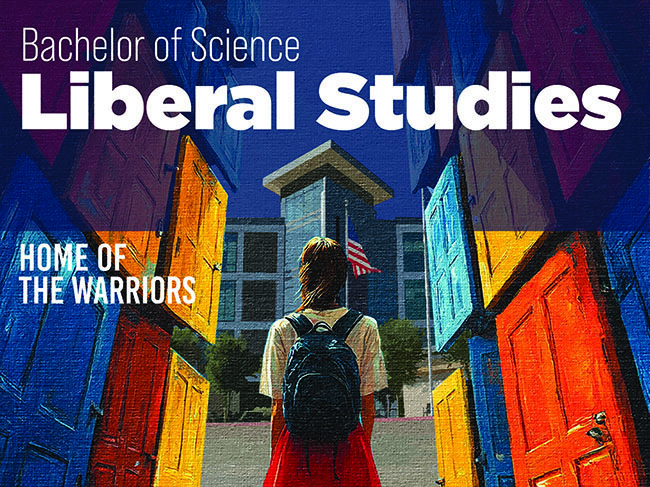
We’ve all heard the jokes. Liberal Studies is for students who couldn’t commit. The indecisive ones. The “I’ll figure it out later” crowd. But those jokes miss the point—and honestly, the plot. Liberal Studies can be an academic free-for-all. It could be some kind of intellectual buffet where you toss a little poetry, some psych, and a dash of philosophy onto your plate and call it dinner. It’s actually one of the most strategic, forward-thinking degrees out there.
Why? Because the world doesn’t come with neatly labeled subject tabs. Neither do most jobs.
Avoiding the Confusion
Liberal Studies—renamed Interdisciplinary Studies in some instances to avoid the “so… you’re a liberal?” confusion—is about combining disciplines to understand the world in full color, not just grayscale. It’s designed for people who see patterns others may miss, who want to connect the dots between society, science, history, politics, and the weirdness of being human.
Think of it like this: traditional majors are pre-packaged meals. They’re convenient, defined, and ready to serve. Liberal Studies is a well-stocked pantry and a working stove. You choose the ingredients, you experiment, and occasionally, you surprise yourself with something better than the recipe. Sure, it takes a little more effort. But you also get a whole lot more flavor.
So how does the program work? Most universities offer a flexible framework. You’ll complete foundational courses maybe in writing, critical thinking, ethics, or philosophy (IDK what the actual foundational courses are, and they may vary between universities), then build your own path by selecting two or more concentrations. That might mean blending communication with sociology, or environmental science with political theory. The result is a program that feels customized, like curating your own playlist instead of being stuck with someone else’s overplayed “Top 40 Hits of Econ.”
And yes, there’s usually a capstone—your final boss level—where you integrate all those ideas into a single project that proves you didn’t just take a bunch of classes but rather learned to use your knowledge.
A Degree with Value
Of course, someone will inevitably ask, “But what can you do with that degree?” Cue the skeptical aunt at Thanksgiving.
Actually, quite a bit.
Liberal Studies graduates work in education, nonprofit leadership, law, public policy, communications, user experience, social research, and beyond. Many land roles that didn’t even exist when they started college. Ever seen a job description asking for a creative, strategic thinker with research skills, emotional intelligence, and strong writing? That’s the sweet spot for a Liberal Studies grad. According to the World Economic Forum’s “Top 10 Job Skills of the Future,” critical thinking, complex problem solving, and creativity top the list. In other words, exactly what this degree cultivates.
Plenty of students pair it with certifications in project management, digital marketing, or data analytics and thrive in hybrid roles that require both people skills and systems thinking.
Design Your Own Adventure
To be fair, it does require initiative. You’re designing your own blueprint. You’ll have to explain your academic choices and occasionally field the “wait… so you didn’t have a real major?” questions. But the payoff is real—especially in a world where versatility, curiosity, and synthesis are worth more than memorization or rigidity.
Ultimately, Liberal Studies rejects the idea that education has to be confined to a single track. It’s for the big-picture thinkers, the curious connectors, the future policy analysts and culture critics and community leaders who know that understanding people requires more than just numbers—or narratives. It’s the major for students who read the fine print and the footnotes and still have questions. The ones who understand that the world’s problems don’t come pre-sorted by discipline—and neither should the solutions.