Maurice Powell Made it Home
By Karen Clos,
Director of Communications and Media Relations –
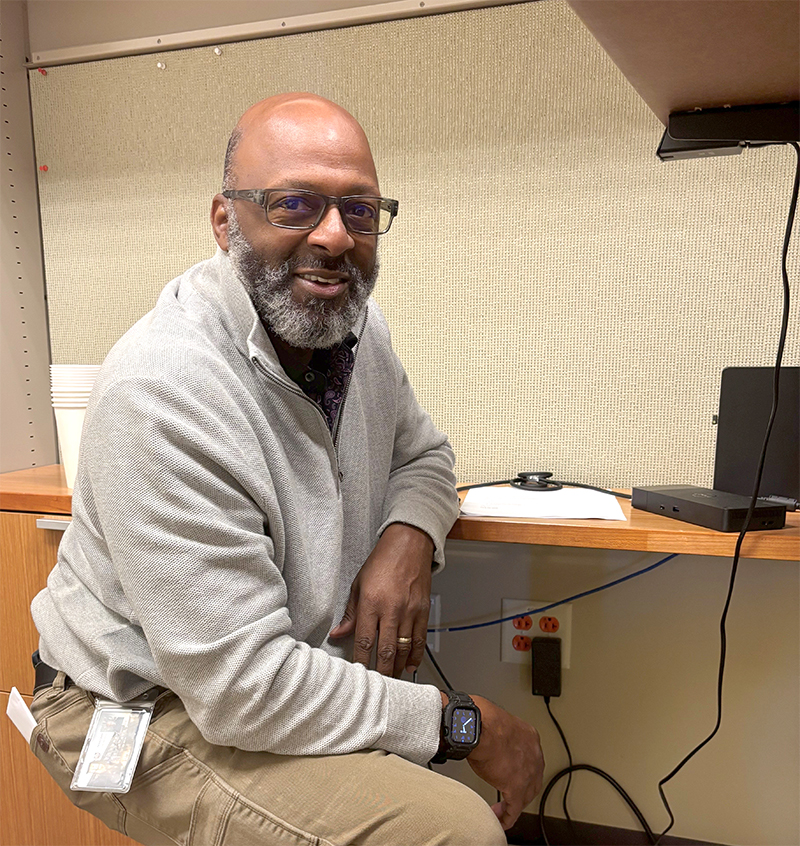
Maurice “Mo” Powell grew up in Decatur, Georgia, in a neighborhood that might as well have been kid heaven — wide open, full of energy, and crowded with cousins — except for the responsibilities that came with it. None of which he resented. Counting brothers, sisters, cousins, and the children tucked along both branches of the family tree, he estimates he helped raise “a whole boatload of kids.” Fifty or sixty, by his count. He says it with a shrug, as if that were simply the price of entry to childhood.
He can rattle off their names the way muscle remembers movement — Connie, Ernestine, Tamika, Damon — and then stops himself before the list unfurls endlessly across the years. They were family, bound by blood and proximity, and they shepherded one another from childhood to adolescence to whatever came next. Looking after them never felt like labor. It was the rhythm of a life where seven o’clock meant breakfast and 8:10 meant the bus or the walk to school. No protest. No regret. He speaks of those years with a quiet gratitude for the closeness they built and the closeness that remains.
This was no neighborly day‑care arrangement. It was kin — a couple of generations’ worth — held steady by the unspoken covenant to each other no matter what. His father was a long‑haul trucker. His mother, Liz, worked factory shifts. The family had two children of their own — Mo and his sister Consuelo — but in practice, Mo grew up helping to raise everyone’s children. It made him steady before he knew the word for it.
The neighborhood itself was middle‑class and anchored by two sacred landmarks: a pair of baseball fields, one in an interracial area and one in the predominantly Black neighborhood. And then there were the improvised fields — the makeshift diamonds built from whatever stretch of ground could be claimed before supper. He remembers them vividly: in the afternoons when there weren’t enough kids for two full teams, the kids adapted the game. They called it “One Hop” when the point was speed, or “Roll the Ball Hit the Bat” when the focus was timing — stripped‑down Southern variations of America’s pastime. Just a coupla kids, one ball, and the kind of ingenuity that teaches a boy to react fast, think fast, and grow up faster.
By high school, Powell had earned a nickname — the kind baseball hands out whether a player likes it or not. “The Runt,” they called him, a name he still repeats sheepishly. At 5’10” and mostly bone and resolve, it stuck. Baseball nicknames rarely honor propriety; anyone craving that, he jokes, should take up cricket. The sport’s history is full of monikers slapped on players by bored sportswriters fueled by tight deadlines and the occasional beer. Some ball players, he says, learned their own nicknames only after reading the next morning’s paper. Ty Cobb once declared that a ball player without a nickname was like a dog without a tail. By that measure, Mo was a full‑fledged player.
And he had talent, too. He also had ten uncles — two of them coaches — and a love for the game to match. A left‑hander who covered first base, the outfield, and the mound, he made the varsity team as an eighth grader, gliding past the eighth‑grade and B‑team rosters without breaking stride. He could shift into any needed position, though catching was out of the question. Left‑handed catchers, he laughed, spend more time corkscrewing behind the plate than actually catching.
School came easily enough — math and science especially — though he admits he did only what was required. By 18, he had joined the reserves. By 22, he was on active duty. In the Army, he learned another kind of field: large‑scale construction equipment, from bulldozers to scrapers to the “big‑ass lifters” he and his squad once took apart down to the studs and rebuilt for the sheer satisfaction of knowing they could.
None of it was simple. Hydraulic fluid, he warns, builds pressure, and forgetting the release valve results in a mechanic drenched in hydraulic baptism. The second time it happened, he learned — and held onto the wrench. He finished his service as an E5, 62 Bravo, working across multiple states and in at least one foreign country. The trajectory that followed feels almost inevitable in hindsight: computers.
In typical Powell fashion, he accelerated quickly. From playing pong to returning to school, earning a bachelor’s degree from A&M–Central Texas in 2023 and a master’s in 2025. Nothing was handed to him. He started at the university IT helpdesk as a student employee. Others might have bristled at that. Not Powell. During COVID, when only essential personnel were permitted on campus, he volunteered for full‑time coverage even though he wasn’t yet full‑time staff. He cut lawns when he needed to. Cared for his granddaughter. Took database courses that tested every nerve — and passed on the third attempt.
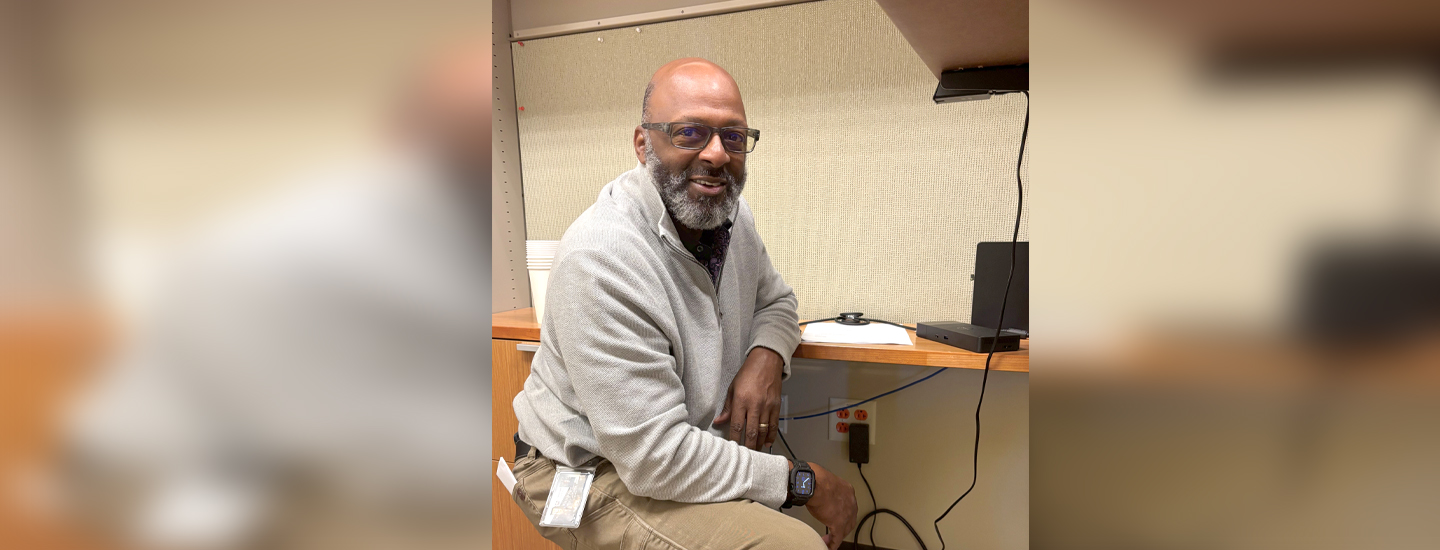
What matters most to him is never speed but thoroughness. He likes doing the job right — helping a colleague with a stubborn printer, an installation issue, or a setup that refuses to cooperate. He doesn’t love being watched while he works but enjoys the way their faces light up when he arrives. He smiles back easily, a brief, warm expression beneath the close‑shaven shadow of a salt‑and‑pepper beard.
He carries pride in several things. His parents owned their home; and he owns his. He represents first‑generation persistence. He bears a scar from the appendix that ruptured not long after he began working full‑time. It nearly killed him, he says — not one prone to exaggeration. And in nearly the same breath, he remembers how the university’s human resources office, particularly Debbie Morrison, made certain he had access to the donated sick‑leave pool that covered him through hospitalization and recovery.
If this was what it meant to be part of A&M–Central Texas, he thought, this was where he wanted to stay.
In the end, Powell never pursued the spotlight. He has always stepped in where needed, covered the ground in front of him, and made the play. And when A&M–Central Texas stepped in for him during his hardest inning, he recognized it instantly: the unmistakable sign of a team that refuses to leave its players stranded on base. For a man who has spent his life bringing others home, staying here was the easiest call he ever made.