
What is Marketing?
By the time you reach theater doors, the line has already lost its shape, spilling sideways, bunching at the rope stanchions, inching forward in uneven bursts. Someone is arguing about assigned seats. Someone else apologizes for standing too close while standing too close. A couple behind you smells sharply of winter coats damp from cold air and whatever cologne was sprayed five minutes too recently. Phones glow everywhere. Screens tilted. Thumbs moving.
Inside, the lobby is loud. Popcorn machines hiss and churn. Ice rattles in plastic cups. A teenager yells an order across the counter. Someone laughs too hard at something that was not even that funny. Jackets brush your arms every time the line compresses. You step forward. Stop. Step forward again. Stop.
The posters are familiar. You’ve seen them already on your phone, on a bus shelter, and on someone’s story. You already know which one you are here for, and so does everyone else.
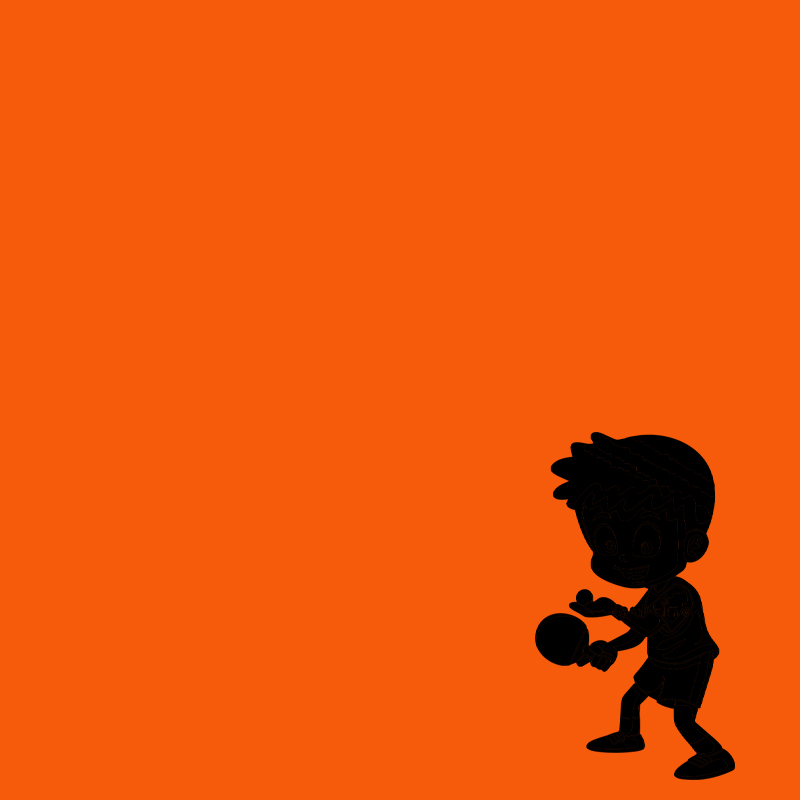
The Marketing of Marty Supreme
For weeks, Marty Supreme, a stylized, high-energy film about the unexpected intense world of competitive ping pong, kept appearing with the same bright orange surface again and again on posters and jackets and pop-up storefronts that seemed to materialize overnight and vanish just as quickly.
The studio behind the campaign, A24, built an entire world around the movie. A bright orange blimp floated over public events and was photographed, circulated, and reposted. A fashion collaboration released limited-run merchandise in the same orange, worn unironically in public. The color itself became shorthand.
Even in limited release, the film opened on just a handful of screens and pulled an unusually high per-theater average, one of the strongest in the studio’s history. By the time it expanded, the audience was already there, already primed, and already excited.
This is marketing at its highest level.
So, What is Marketing?
But what exactly is marketing?
Marketing is the intentional guidance of attention toward meaning, so that recognition and choice are no longer random. You didn’t search for it. You didn’t even say it out loud. You maybe thought about it once, vaguely, weeks ago while half-watching Rush Hour 2 and scrolling through the latest videos of pets giving their owners the bombastic side eye. And yet, there it is. A message so specific, you briefly wonder whether you’re under surveillance or your phone has developed sentience. The platform mary jane shoes you almost bought. The kitchen organization course you booked marked and forgot about. The tried-and-true ancient and all-natural skincare routine for the person you are becoming.
It’s impressive, unsettling, and, if we are honest, a little flattering because someone, somewhere looked at a trail of late-night scrolling, impulsive clicks, abandoned carts, and half-formed aspirations to say “This ad. Now.”
Marketing behaves like infrastructure. It routes attention through crowded landscape and builds familiarity in advance. It reduces friction so that when you encounter a choice, it already feels recognizable.
Creating an Image
The most obvious example is pop music. When an artist repeats the same visual cues across performances, red carpets, music videos, and stage design, the audience learns the world before any lyric. Consider singer Sabrina Carpenter. Night after night on tour, she stepped on stage in sequined corsets paired with matching glittering go-go boots. The silhouettes barely changed. The sparkle never wavered. Even her viral “Nonsense” outros followed a familiar ritual of playfully improvised rhymes tailored to each city. The ritualized structure made the moment instantly recognizable, while the localized lyrics gave fans a reason to watch, share, and speculate what creative lyrics Sabrina would think up in the next city, turning repetition into anticipation.
By the end of a show, you remember the overall world you were transported to rather than a mere song or album. Repetition created visual memory. Visual memory created instant recognition. Recognition made clips sharable without excessive context. Sharing drove streams and ticket sales. Her cohesive visual identity reduced the friction around her music. Familiar things are easier to remember, easier to describe, and easier to recommend. In an attention economy, memory is currency.
Some artists take this further by curating entire universes audiences can step into. That is how artist David Bowie operated. Each phase of his career arrived not just with new music, but with a character, a visual language, and a set of rules that governed how that world looked and felt. Aside from being an album era, Ziggy Stardust was a persona with its own costumes, gestures, and mythology. Similarly, his other persona, “The Thin White Duke” came with its own imagery but with a different posture, palette, and emotional temperature.
These worlds circulated far beyond the records themselves. Fans adopted the symbols. Media amplified the imagery. Recognition traveled independently of listening. Long before a song was played, his worlds have already announced themselves and loyalty followed as a result of immersion. Brands thrive when they stop trying to appeal to everyone and start building worlds people can immerse themselves in.
Creating the Marketing Buzz
Speaking of which, Duolingo, a language learning app, applies this same sort of magic to their mascot. Prior to its viral social media presence, the company’s cartoon owl developed a recognizable personality inside the product itself, through push notifications, in-app copy, and streak reminders that framed the characters as playful, needy, and lightly guilt-inducing. That tone trained users to recognize the owl and its personality before encountering it anywhere else. When Duolingo later expanded onto social platforms, its social media team amplified that existing voice through skits, exaggerated emotions, recurring jokes, and a tongue-in-cheek fixation on pop-culture, including a long-running gag involving Dua Lipa. The result was a mascot that felt familiar even to people who had never completed a lesson. The character circulated independently. People dressed as the owl for Halloween. Familiarity encouraged habit, habit increased retention, and retention fueled growth, and despite the intentional marketing, engaging with the content and participating in the lore felt playful rather than promotional.
Then, there is Spotify, a music streaming service. At the end of each year, Spotify sends users a brightly designed summary of their listening habits, including but not limited to top songs, artists, albums, genres, total time spent listening to music, podcasts, and all of the above titled “Spotify Wrapped.” Spotify Wrapped reframed data collection as narrative and this narrative has become an endless content designed for sharing. When friends and acquaintances see these summaries, they become curious about their own listening habits. Curiosity leads to downloads. Downloads lead to more Spotify usage. And the cycle feeds itself.
Living in the Marketing Loop
As you can see, marketing includes far more than the endless promo codes that are somehow always expired the moment you consider using them, the sad “limited-time offer” ad banners that have been running since 2016, and the unnecessarily overt, flashing neon billboard signs looming over the highway. It includes positioning, branding, storytelling, distribution, public relations, experimentation, merchandise, and far more subtle forms of signal-building. All of these are tied together by what I like to call “the loop.”
Marketing creates recognition. Recognition enables participation. Participation generates sharing. Sharing creates curiosity. Curiosity leads to adoption. Adoption feeds the system back into itself. This loop applies to products, platforms, and people like yourself.
So, think, do you like the way you’re currently perceived or do you need some intentional and strategically planned marketing to enhance that?
Toodaloo!
Demetra Paizanis is the communications coordinator at Texas A&M University–Central Texas. She oversees communications and social media efforts in the Marketing and Communications office.