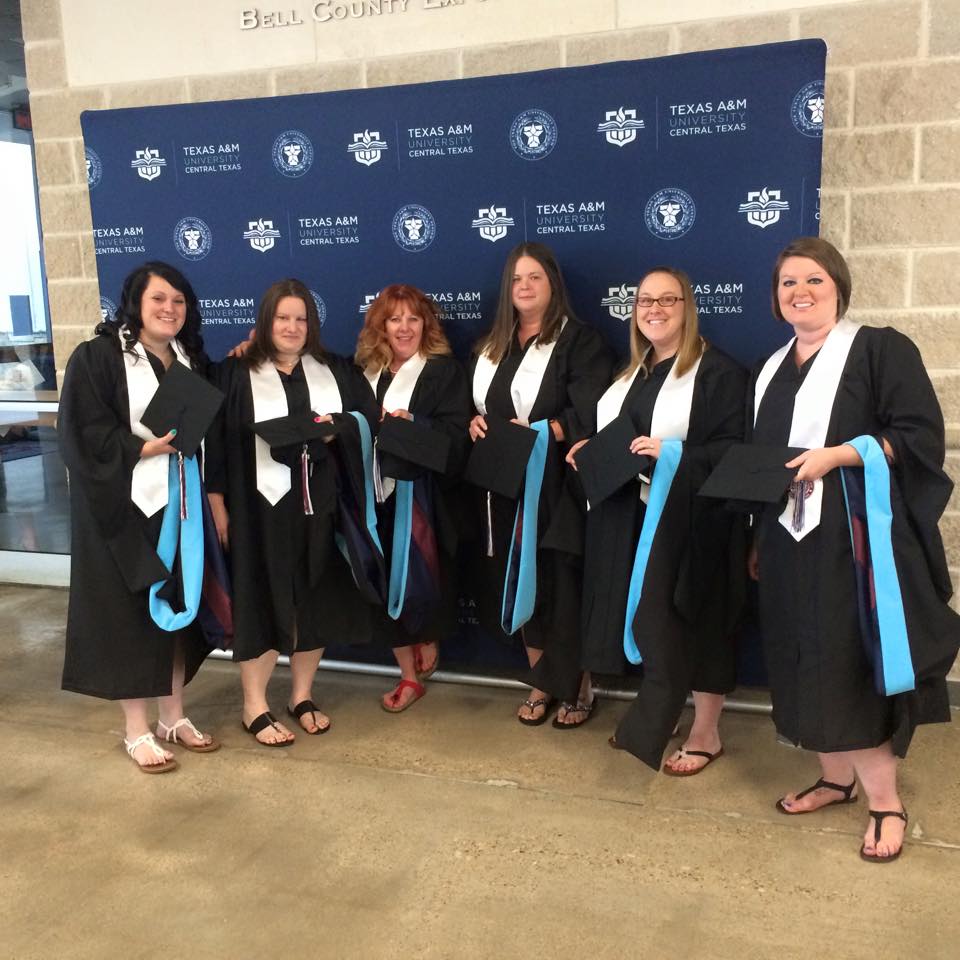
Tiphani Morris’s Long Way Forward






By Demetra Paizanis
Communications Coordinator
She graduated high school around six months pregnant.
Alongside her husband, still barely out of adolescence themselves, made a decision that would determine the shape of their lives. They would keep going.
College came next, then work, then parenting, each arriving without waiting for the others to settle. Days stretched long and nights longer still, the effort folding itself into narrow windows between responsibilities, often late at night, often unnoticed. What may have resembled a straight line from the outside, felt like constant adjustment on the inside.
From Humble Beginnings
Long before these constant life pivots, Tiphani Morris’ parents grew up in a small town in upper Michigan. After her mother had brothers, her father joined the Army, and the family followed orders wherever they led. First to Germany, where she was born, then Fort Hood.
“To be honest, I do not remember home being anywhere else besides this area,” Morris said.
Family is here. The community is familiar. The choice to stay was like gravity.
Her grandparents remained in upper Michigan, which meant visits arrived in fragments, weighed by scarcity.
“The time we did have together was incredibly valuable.”
When she thinks about her grandfather, she pictures him in his garage.
“It was the biggest garage I had ever seen, filled with every tool imaginable. He was always building something, always working with his hands,” she said. “One summer when I went to visit, we built a birdhouse together and placed it out in the yard. He loved sitting back and watching the birds come—especially the cardinals.”
When least expected, her grandfather passed away without any warning or preparation.
“We lost him suddenly during my sophomore year of high school, which was very difficult.” Morris said. “What I will always remember about him is his kindness and his heart of gold. My grandfather was the kind of man who would give you the shirt off his back. He loved talking to people, always had a story to tell, and had a way of making connections wherever he went. He truly knew everyone. Now, whenever I see a cardinal, I think of him and feel close to him again.”
With her grandfather gone, she now felt a greater sense of responsibility. Even as a child, she organized, guided, and stepped in when things needed structure. Responsibility followed her into adolescence and adulthood, shaping how she moved through school, relationships, and expectations placed upon her.
“Without even realizing it sometimes, [grandfather’s] influence shows up in the way I try to take time for people, to listen, and to help whenever I can,” she said. “I find myself wanting to make others feel welcome and cared for, just like he did. In those small, everyday moments of kindness and support, I can see pieces of him living on through me.”
Building Family and Career
Tiphani met her husband in high school while she was a junior and he was a senior. Ten months after they started dating, they got engaged. Two months later, they learned she was pregnant. She finished high school carrying a future that would not wait for her to be ready.
For the first four and a half years of marriage, they lived with her parents while attending college. Full-time work overlapped with full-time classes and full-time parenting, days arranged around necessity. There was no such thing as preference.
“Balancing full-time jobs, full-time school, and full-time parenting was challenging.”
But progress accumulated.
She earned her bachelor’s degree in early childhood- 6th grade education from the University of Mary Hardin-Baylor and entered the classroom—immediately, teaching third grade at Nolanville Elementary in the Killeen Independent School District. Teaching felt right, but there were limits. Decisions made far from students continued shaping what happened inside the classroom. Understanding the systems behind those decisions became difficult to ignore.
“Early in my life, I knew I wanted to be both a mom and an educator,” Morris explained, but understanding and influencing the decision-making process meant returning to the college classroom.
Morris began stacking responsibility on top of an already full life. She was teaching full time. Her husband was still completing his degree. They were raising a young child. When she decided to apply to the leadership program at Texas A&M University–Central Texas, a supervisor questioned the timing.
“That conversation caused me to pause and seriously reflect on my decision,” Morris said. “After much prayer and consideration, I chose to move forward with the interview process and place the outcome in God’s hands.”
Facing a New Challenge
The program was smaller than expected. Classes were personal. Many of the people in the room were educators from the same district, carrying similar pressures. Once a month, she spent a full Saturday on campus. Evenings during the week disappeared into coursework. Other weekends were spent wherever space allowed.
“I felt most like myself during the once-a-month Saturday classes,” she said.
But no matter how much relief came, there always seemed to be strain that followed. Teaching, coursework, and family responsibilities converged.
“I often felt pulled in many different directions and unable to give my best in every area, which left me feeling as though I was failing everywhere.”
That feeling restructured her understanding.
“Early in my journey, I believed that hard work alone would naturally lead to success,” she said. “What changed that belief was real-world experience in leadership.”
Embracing Leadership
After completing her master’s degree in educational administration at A&M–Central Texas, she stayed in the classroom. Another child arrived. She completed a superintendent certification through the University of Texas at Tyler while teaching, then began doctoral work in curriculum and instruction at Liberty University.
Her leadership roles were quite the responsibility. As Campus Facilitator for Special Programs at Audie Murphy Middle School, she oversaw Special Education and Section 504 compliance, work where precision mattered and mistakes carried legal and human consequences.
“There are situations that coursework alone cannot fully prepare you for,” she said.
But she persevered.
After serving as assistant principal at Ira Cross Jr. Elementary, she became principal of Harker Heights Elementary School in the same district where she began her career. Immediately, the role expanded, staff support, and student needs emerged daily. Endless responsibilities, little ceremony.
“This path has required me to give up time.”
Luckily, all of that time investment paid off. Her doctorate was completed. She had the credentials. She was a leader. That leadership meant more consequences, and less margin for error.
“Am I leading in the way that truly empowers others while staying true to myself?”
By the time the building empties, the work remains.
There are still emails unanswered, decisions postponed to the morning, conversations that will need to happen soon. The lights in the office go dark one by one, but the day does not fully release its hold. Tomorrow has already begun assembling itself.
She locks the door and arrives home through familiar streets, the same route she has taken for years, past schools and neighborhoods that have watched her grow up alongside them. At home, there are dinners to make, homework to check, stories half-told and routines. Time moves forward whether it is acknowledged or not.
And still, the question follows her into those spaces. “Am I leading in the way that truly empowers others while staying true to myself?”